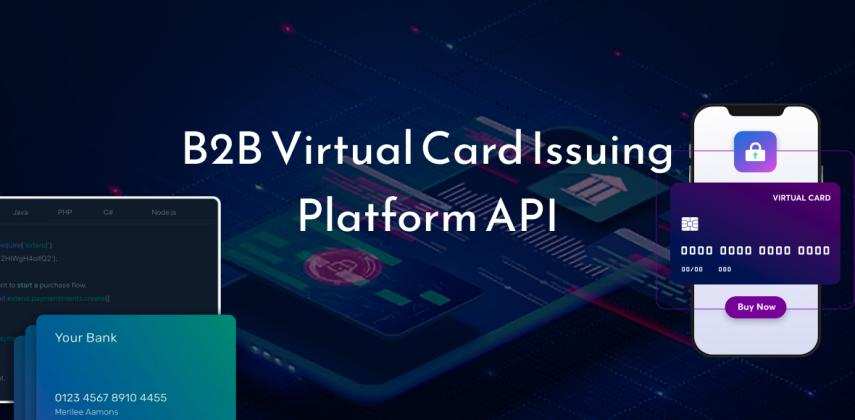
Every payment your platform processes is an opportunity to create more value. At Gpaynow, we help businesses move beyond simple payouts by enabling them to issue virtual Visa and Mastercard cards directly through our API. Instead of sending funds to third-party cards, you keep the payment experience within your ecosystem, giving your customers a secure, flexible way to spend while strengthening your platform's role in every transaction.
Our card issuing infrastructure is built for fintechs, marketplaces, payroll providers, and SaaS platforms that want to launch embedded financial services without building banking infrastructure from scratch. We provide the technology, compliance support, and reliable API you need to issue virtual cards quickly, helping you increase customer retention, unlock new revenue streams, and deliver a better payment experience under your own brand.
In short: A B2B virtual card issuing platform API lets your business issue virtual Visa and Mastercard cards to your own customers, sellers, or workers through code. You control the branding, the limits, and the rules. We hold the sponsor bank, the network connections, and the card-data security. Your platform earns a share of interchange on every purchase, and you can be live in days — with no card-issuer license and no KYC to buy your first test card.
Key takeaways
✅ Your platform issues branded cards to users through one API, with no banking license.
✅ Embedded finance for SMEs is $185 billion of demand with $32 billion served the space is open.
✅ You earn interchange on every card purchase your users make.
✅ Payouts, spend data, and the customer relationship stay inside your product.
✅ Start in the sandbox today no KYC to buy your first card.
What is a B2B virtual card issuing platform API?
A B2B virtual card issuing platform API is a service that lets your business create and manage payment cards for your own customers through code. Your users get virtual Visa or Mastercard cards inside your app, and you control every card from your systems.
The word “platform” is the difference from a simple card API. You are not buying cards for yourself. You are running a card program: many cardholders, many cards, your brand on all of it.
Under the surface, three jobs are split cleanly. We hold the sponsor bank relationship and the network connections. Your platform owns the product, the users, and the rules. Your users just see a card that works.
If you want the concepts behind card issuing first, start with our main guide, the
virtual card issuing API. This page is about running cards at platform scale.
Why platforms are embedding card issuing now
Platforms embed card issuing for three reasons: new revenue, better retention, and owning the data they currently give away.
Revenue you already earned. Every card purchase pays interchange, and your program keeps a share. Your users’ spend becomes your income line, not the bank’s. Most of the B2B market has already moved over 78% of B2B firms now use virtual cards in their payment flows (
Global Banking and Finance).
Retention through usefulness. A user who holds your card opens your app to check the balance, top up, and track spend. You stop being a tool they visit and become a product they live in.
Data that stays home. When users spend on your cards, you see the transactions. That feed powers your reporting, your risk models, and your next product decision.
The timing matters too. Embedded finance is a $100 billion-plus market growing at over 30% a year (
Value Add VC). The platforms that issue first in each niche become the default there.
What you can build on a card issuing platform
Card programs show up wherever a platform moves money for other people. These are the builds we see most.
Marketplace and OTA payouts: Pay each seller, host, or booking with a single-use card tied to that exact transaction. Travel agencies and insurance platforms run this pattern daily: the card exists for one payment, then closes.
Vertical SaaS cards: You run the software a trade lives in — salons, trucking, construction, clinics. Add a branded card, and the money side of the trade moves into your product too. This is where the open $153 billion of unserved demand sits.
Expense products: Give each business on your platform capped cards for its team. The rules run per card: limits, category blocks, expiry. Our corporate virtual card API guide covers the spend logic you would pass on to your customers.
Gig and creator payouts: A worker finishes a job, and your platform funds their card in the same minute. No bank details collected, no transfer delay.
Claims and disbursements: An insurer approves a claim, and the payout card funds at the moment of approval, locked to the merchant it should pay. Just-in-time funding makes the card exist only when your logic says yes.
Crypto platforms: Exchanges and wallets let users spend balances at any merchant. The flow is covered in our crypto virtual card API guide.
Want to sell cards rather than embed them? That is a different model, with no code required — see our reseller program.
How the platform works, end to end
Running a card program sounds heavy. Through the API, it is six calls and a webhook. Here is the full loop.
Create cardholders: Each of your users becomes a cardholder object with one request. Your platform stays the account of record.
Issue cards: One call per card, virtual and instant, on Visa or Mastercard. The request is the same one in our
API quickstart, just multiplied by your user base.
Fund flexibly: Prefund a program balance, let users top up, or use just-in-time funding so money moves only when a charge is approved. Top-ups work from balance or stablecoins.
Set rules per card: Caps, merchant locks, category rules, single-use, and time windows every control in our spending controls guide applies to every card you issue.
Listen to webhooks: Each authorization, decline, and refund fires an event to your system. Your app shows balances and activity in real time without polling.
Reconcile automatically: Every card carries your metadata user ID, order ID, project and every charge inherits it. Your ledger fills itself.
You run all of this from code. Your operations team gets a dashboard for the human parts: freezing a card, checking a dispute, watching program health.
Why platforms build on Gpaynow
Plenty of issuing platforms exist. Here is what makes ours the one to build on.
Days to live, not quarters: Sandbox today, first real cards this week. Legacy programs take months of onboarding before a single card exists.
No license, no bank negotiation: We bring the sponsor bank and the network relationships. Your team writes product code, not compliance filings. The model is explained in our USA issuing guide.
Your brand everywhere: Cards, dashboard, and customer emails carry your name. Your users never hear ours.
Both networks, one field: Issue Visa or Mastercard per card with a single parameter. The network side is covered in our Mastercard guide.
US BINs that clear: Your users’ cards carry US BINs and a US billing address, which pass the checks that block many virtual cards at American merchants.
Interchange share from day one: Your program earns on every purchase. The rates sit on our pricing page, not behind a sales call.
Bulk and scale built in: Issue a thousand cards in one request. The same API that runs your pilot runs your millionth card.
No KYC to buy your first card: Evaluate the real product today. Program-level checks come later, when you scale and they are built into the platform, including KYC and KYB flows for your own users.
Your first 30 days
Platforms that launch well launch narrow. This sequence takes you from nothing to a live program in a month.
Week 1 — Prove the loop: Create a cardholder, issue a card, fund it, and run a sandbox charge. Wire the webhook into your app. One engineer, a few days.
Week 2 — Build the surface: Put the card inside your product: a balance screen, a top-up button, a freeze switch. Our how to use a virtual card API guide maps each step.
Week 3 — Pilot with real users: Issue live cards to a small group. Watch the webhook feed, tune your limits, and collect the first interchange.
Week 4 — Open it up: Roll out to your user base with rules you have already tested. Scale is an API property, not a rebuild.
By day 30, your platform holds the card, the data, and the revenue that used to leave with every payout.
What does it cost?
You pay per card and per top-up, with no big setup fee, and your program earns interchange back on spend. For many platforms the program pays for itself as volume grows.
Is it secure enough for your users?
Yes. Card data lives with us under PCI DSS Level 1, the top standard for card handling, so raw numbers never touch your systems. Webhooks are signed, keys are scoped, and every action is logged.
Your users’ risk is boxed per card. A leaked number reaches one capped card, not their balance and not your program. The full security model is in our main guide.
Frequently asked questions
What is a B2B virtual card issuing platform API?
It is a service that lets your business issue virtual Visa and Mastercard cards to your own customers through code. You control branding and rules, we hold the bank and network side, and your program earns interchange on spend.
Do I need a banking or card-issuer license?
No. We hold the sponsor bank relationship and network connections. Your platform integrates an API, the way you would any other service.
How is this different from your reseller program?
The platform API embeds cards inside your product through code. The reseller program lets you sell cards under your brand with no integration. Embedding suits products; reselling suits sellers.
How do we make money from issued cards?
Two ways. You can price cards and top-ups to your users, and your program keeps a share of interchange on every purchase.
Can we brand the cards as our own?
Yes. Cards, dashboard, and emails carry your brand. Your users see you, not us.
How long does the integration take?
The core loop cardholder, card, funding, webhook is a few days of one engineer’s time. A polished in-app card surface typically fits inside 30 days.
Can our users’ cards have individual limits and rules?
Yes. Every card carries its own caps, merchant locks, category rules, and expiry. Rules run at authorization on every charge.
Do we need KYC to start building?
No KYC to buy your first card and test. Live programs bring standard business checks, and the platform includes KYC and KYB flows for onboarding your own users.
Keep the card, the data, and the revenue
Your platform already does the hard part. It has the users and it moves the money.
Issue the card that money lands on. Create your Gpaynow account, run the sandbox loop this week, and put your brand on your users’ spending. No license, and no KYC to buy your first card.